
Is Tingling in the Foot a Warning Sign of Sciatica?
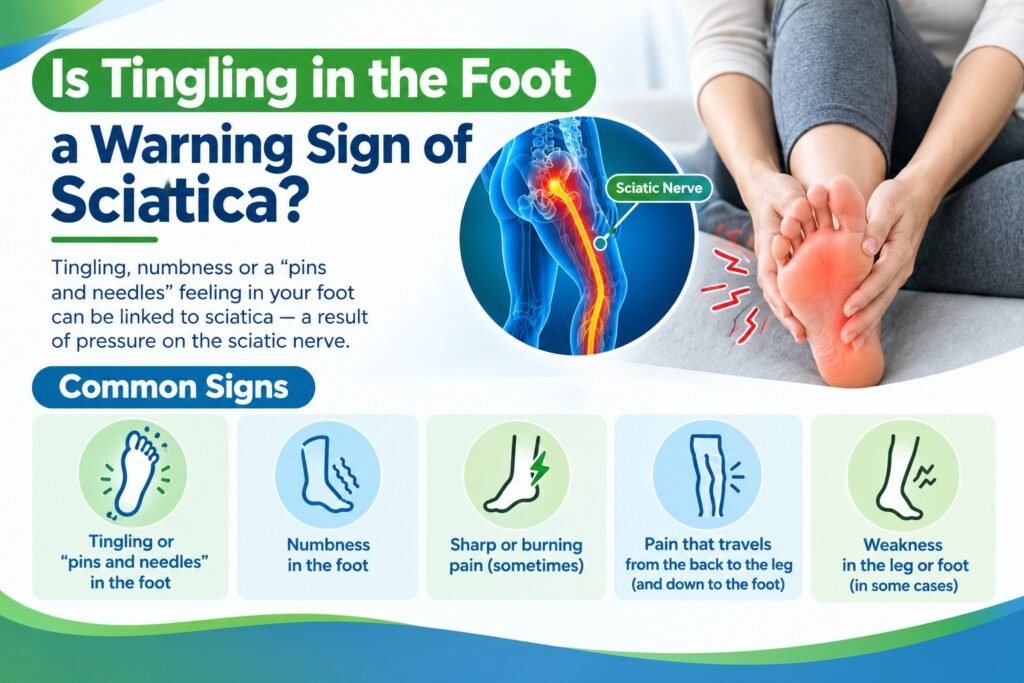
You wake up and your foot feels like it’s full of pins and needles. You shake it, rub it, walk around. It fades, then comes back. Sound familiar?
Many people in Ahmedabad brush this off as a “sleeping foot” or a vitamin problem. Sometimes that’s true. But when the tingling keeps returning, especially with back or leg discomfort, it may be your sciatic nerve asking for attention. Understanding the signs early makes sciatica pain treatment in Ahmedabad simpler and more effective.
What Does Foot Tingling Have to Do With Sciatica?
The sciatic nerve is the longest nerve in your body. It begins in your lower back, passes through the buttock, and runs down the back of each leg to the foot.
When something presses on or irritates this nerve, the signals it carries get disturbed. That’s why you may feel tingling, burning, or numbness far from the actual problem. The trouble might sit in your lower back, but your foot is where you feel it.
Think of it like a pinched garden hose. The kink is in one spot, but the water trickles weakly at the far end.
Is Tingling Always a Sign of Sciatica?
No, and that’s worth saying clearly. Tingling in the foot has several possible causes, including:
- Diabetes-related nerve damage (neuropathy)
- Low vitamin B12 levels
- Sitting in one position or wearing tight footwear for long hours
- Pressure on nerves at the ankle or knee
- Poor blood circulation
So how do you tell the difference? Sciatica usually affects one leg, often starts in the lower back or buttock, and may worsen when you sit, cough, or bend forward. Nerve damage from diabetes tends to affect both feet and creeps up slowly.
Only a proper examination can sort this out, so avoid guessing.
What Other Symptoms Come With Sciatica?
Tingling is often just one piece of the picture. Patients commonly describe:
- A sharp or shooting pain from the buttock down the leg
- Dull ache in the lower back
- Numbness in the leg or foot
- A feeling of heaviness or weakness in the leg
- Pain that gets worse after long sitting
Some people feel pain more than tingling. Others feel mostly tingling with very little pain. Both can be sciatica.
Pain and swelling are the main reasons people feel discomfort in daily life. Even small movements can feel diffi cult.
This therapy is often used to help manage these symptoms. When pain reduces, movement becomes easier and daily activities feel more comfortable.
What Causes Sciatic Nerve Irritation?
Several everyday problems can squeeze the nerve:
- Slipped or bulging disc: The soft cushion between spine bones pushes outward and presses on the nerve. This is the most common cause.
- Spinal narrowing (stenosis): The space around the nerves becomes tight, often with age.
- Piriformis syndrome: A tight muscle in the buttock presses on the nerve.
- Poor posture and long sitting hours: Common among office workers and drivers.
- Injury or heavy lifting: A sudden strain can trigger symptoms.
If you spend most of your day at a desk or on a two-wheeler, your back may be carrying more stress than you realise.
When Should You See a Doctor?
Mild tingling that settles within a day or two is usually not worrying. But don’t wait if you notice any of the following:
- Tingling that lasts more than a week or keeps returning
- Pain that disturbs your sleep
- Weakness in the foot, such as dragging your toes
- Symptoms after a fall or injury
Seek urgent care right away if you experience loss of bladder or bowel control, or numbness around the groin or inner thighs. These can signal serious nerve compression and shouldn’t be delayed.
Please don’t feel anxious reading this. Most cases are manageable, and early attention is what makes the difference.
How Is Sciatica Diagnosed?
A good doctor begins by listening. You’ll be asked where the tingling starts, what makes it better or worse, and how it affects your routine.
A physical examination follows, checking your reflexes, muscle strength, and leg movements. If needed, your doctor may suggest an MRI or X-ray to see what is pressing on the nerve. Not everyone needs scans straight away.
What Does Sciatica Pain Treatment in Ahmedabad Involve?
The good news is that most people get better without surgery. Treatment is usually step by step:
- Medication: To calm inflammation and ease pain, as prescribed by your doctor.
- Physiotherapy: Guided stretches and strengthening to take pressure off the nerve.
- Targeted pain procedures: For stubborn pain, image-guided injections near the irritated nerve can give relief.
- Lifestyle changes: Better posture, regular movement, and weight management.
- Surgery: Considered only when other treatments fail or there is significant nerve damage.
At Impulse Pain Clinic, the approach is to find the cause first and then plan care around your daily life, not just mask the pain.
How Can You Ease Symptoms at Home?
While you arrange a check-up, these simple habits may help:
- Walk gently for a few minutes every hour instead of staying in bed
- Apply a warm pack to the lower back for 15 to 20 minutes
- Avoid heavy lifting and sudden twisting
- Sit with proper back support and keep your feet flat
- Sleep on your side with a pillow between your knees
Complete bed rest tends to make things worse. Gentle movement usually helps recovery.
Can Sciatica Be Prevented?
Not always, but you can lower your risk. Stay active, strengthen your core muscles, and lift objects by bending your knees rather than your back. If your job keeps you seated, stand and stretch often. Maintaining a healthy weight also reduces strain on your spine.
Final Thoughts
Tingling in the foot isn’t always sciatica, but it shouldn’t be ignored when it keeps coming back, especially alongside back or leg discomfort. Your body is giving you a signal, and listening early can save you months of discomfort.
The encouraging part is that sciatica responds well to the right care. With proper diagnosis and a clear plan, most people return to their normal routine.
If persistent tingling or leg pain is troubling you or someone in your family, consider booking a consultation at Impulse Pain Clinic for a thorough evaluation and personalised sciatica pain treatment in Ahmedabad. You don’t have to live with it.